
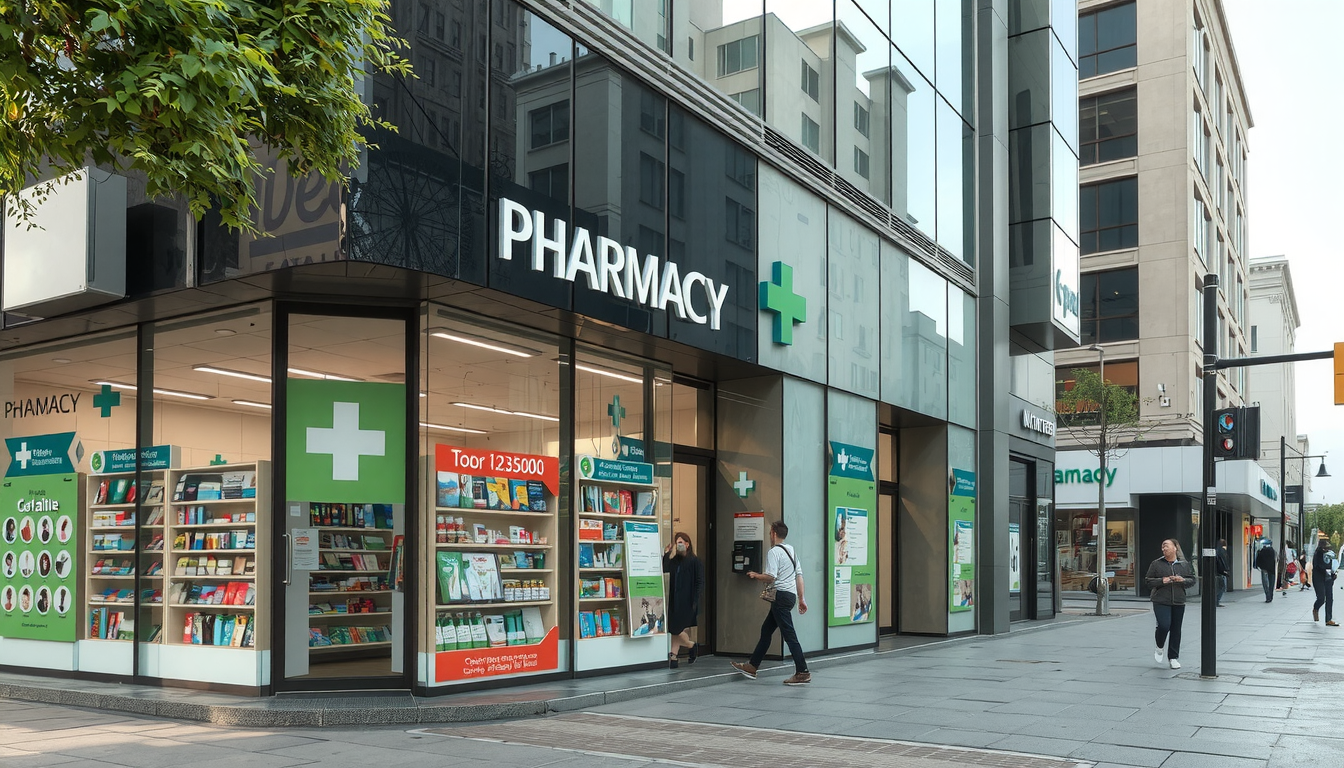
Choosing where to open your pharmacy is the most important decision you will make as an owner. This choice directly impacts your daily customer flow. It affects your ability to turn a profit. It also impacts the long-term health of your business. In 2026, finding the best location for a pharmacy is more than just securing a spot with a “For Lease” sign. It requires a strategic approach based on data. This decision is crucial for independent pharmacy owners.
Key Takeaways
- Demographics are Destiny: The right location has many of your ideal patients. This includes seniors, young families, or those with specific health needs.
- Visibility & Accessibility are King: If patients cannot easily see your pharmacy or find parking, they will go elsewhere. Convenience is a top priority for modern consumers.
- Competition is a Double-Edged Sword: Study your competitors. Look for what they do well. But more importantly, find what they do poorly. This is where you can win.
- A Data-Driven Approach is Non-Negotiable: A detailed pharmacy location analysis turns a hopeful guess into a smart business strategy. It is the foundation for success.
This guide will give you a complete framework for your search. We will walk you through every step. You’ll go from broad market research to inspecting a specific site. Our goal is to help you find the best location for a pharmacy and secure your future success.
The Core Pillars of a Winning Pharmacy Location
To find the ideal spot, we must first understand what makes a location great. A thorough pharmacy location analysis rests on five core pillars. Missing even one can put your new business at risk.
Pillar 1: Demographic and Population Analysis
You need to know who lives and works in the area. It is not enough to just know the population number. You must dig deeper to understand the people you will serve.
- Age Groups: Is the area home to many senior living communities? Or is it a growing suburb with young families? Older populations often need more prescriptions.
- Income Levels: The average income affects what people can buy. This is especially true for your front-end items. These include vitamins, beauty products, and over-the-counter medicines.
- Health Metrics: Look for areas with higher rates of chronic diseases. These include diabetes or heart conditions. These patients require ongoing pharmacy care.
- Insurance Coverage: What are the most common insurance plans in the area? Knowing this helps you prepare for billing and reimbursement.
You can find this information from local census bureaus. Public health departments also have this data. Market research firms are another source. This data is the first step in identifying a promising market.
Pillar 2: Visibility, Accessibility, and Traffic Flow
Your pharmacy must be easy for patients to find and access. Convenience is often the deciding factor for customers.
Foot Traffic vs. Vehicle Traffic: You need to understand how people move around the area. Watch the flow of cars and pedestrians at different times. Check morning rush hour and late afternoon. A good location for a pharmacy captures this natural movement.
Parking: Never underestimate the power of good parking. Is there enough space? Is it safe and well-lit? Is it easy to get in and out of the lot? A lack of parking is a major reason customers will avoid a business.
Visibility: Can people see your pharmacy easily from the main road? Check local laws about signs. Make sure you can have a large, clear sign. If you are hidden, you are invisible.
Accessibility: Your building must be easy to enter for everyone. This includes people with disabilities, the elderly, and parents with strollers. A drive-thru is a huge advantage. Many customers value convenience and the option of a drive-through.
Pillar 3: Competitor Landscape Mapping
Looking at your competition is not about fear. It is about finding opportunities. A smart pharmacy location analysis uses competitor data to find gaps in the market.

Ask these questions:
- Where are the other pharmacies? Map out every chain and independent store nearby.
- What services do they offer? Do they do compounding, medication therapy management (MTM), or delivery?
- What are their weaknesses? Maybe they have a reputation for poor customer service or long wait times. Maybe they don’t offer niche services. This is your chance to do better.
- Is the market full of pharmacies? Or is it an area that needs another one?
Answering these helps you find a place where your pharmacy is not just another option. It becomes a needed one.
Pillar 4: Proximity to Prescribers and Healthcare Hubs
Pharmacies and doctors have a powerful relationship. Being close to the people who write prescriptions is a recipe for success. The best location for a pharmacy is often near a hub of medical activity.
Look for locations near:
- Doctor’s offices and large medical clinics
- Hospitals and urgent care centers
- Dentist and specialist offices (like eye doctors or dermatologists)
- Veterinary clinics, if you plan to offer pet medication compounding
These partnerships can create a steady stream of patients who need your services.
Pillar 5: The Physical Space and Future-Proofing
The building itself is a critical part of the location decision. The space must fit your needs today and in the future.
Consider the square footage you need. This includes the dispensary, your retail floor, a private counseling room, and storage. You also need to check local zoning laws. Make sure a pharmacy is allowed in that spot.
The layout of the space is just as important. It needs to support an efficient workflow for your staff. It should also create a welcoming experience for patients. A professional pharmacy design is not just about looks. It is about making the business run smoothly and effectively from day one.
The Pharmacy Location Analysis Flywheel: A Step-by-Step Framework
Finding the best location for a pharmacy is not a one-time task. It is a process. We call this the “Flywheel.” Each step builds on the last. This creates momentum that leads you to the right decision. This framework makes a complex process manageable.
The four steps are:
1. Macro Research & Data Gathering
2. Micro Analysis & Site Shortlisting
3. On-the-Ground Vetting
4. Financial Modeling & Viability
Step 1: Macro Research & Data Gathering
This is the big-picture view. Your goal here is to identify general areas that look promising. These could be cities, towns, or large neighborhoods.
Use online tools like Google Maps and public data from census websites. Look for areas with population growth and a strong local economy. Search for “pharmacy deserts.” These are places that are underserved by existing pharmacies. This initial research helps you focus your efforts. It also helps you avoid wasting time on poor markets.

Step 2: Micro Analysis & Site Shortlisting
Now, we zoom in. Take the promising areas from Step 1 and look for 3-5 specific properties.
In these smaller zones, map out every competitor, medical office, and senior community. Create a spreadsheet to score potential spots. Base this on the five pillars we discussed earlier. This micro analysis helps you compare different properties using hard data, not just feelings. This detailed work is a key part of any serious pharmacy location analysis.
Step 3: On-the-Ground Vetting (The Site Visit)
Data can only tell you so much. You must visit your shortlisted locations in person. This is where you confirm what the data says and uncover new information. Do not just look; observe.
Use this checklist to guide your site visits. Spend time in the area on different days and at different times.
| Observation Point | What to Look For | Notes/Rating (1-5) |
|---|---|---|
| Morning/Evening Traffic | How does traffic flow during rush hour? Is it easy to turn into the parking lot? | |
| Competitor Visit | Go inside a competitor’s pharmacy. Is it busy? Are the staff friendly? What is the wait time? | |
| Talk to Locals | Speak with owners of nearby businesses. Ask them about the area, foot traffic, and safety. | |
| Physical Inspection | Look at the building. Are there any visible problems? Check the condition of the roof, windows, and utilities. |
This boots-on-the-ground research is essential for choosing the best location for a pharmacy.
Step 4: Financial Modeling & Viability
The final step is to see if the numbers work. A great location is only great if it can be profitable.
For your top potential site, you need to project your income and costs. Estimate how many prescriptions you might fill. Base this on the number of doctors and residents nearby. Then, calculate your major expenses. These include rent, staff salaries, and the cost to build out the space.
Create a simple profit and loss (P&L) statement for the first three years. This financial model will show you if the location is truly viable. This is where the search for the best location for a pharmacy becomes a real business plan.
Beyond the Obvious: Uncovering Hidden Location Opportunities
The best locations are not always the most obvious ones. In 2026, thinking creatively can give you a major advantage. Here are some ideas for finding hidden gems that other entrepreneurs might miss.
The Modern “Pharmacy Desert”
Pharmacy deserts are not just in rural areas. They also exist in busy cities. A desert can be an urban neighborhood with poor public transportation. It can also be an area where one big chain pharmacy has a monopoly but provides terrible service.

Use local knowledge and online maps to find these service gaps. If residents in an area complain about long lines or rude staff at their only pharmacy, that is a huge opportunity. An independent pharmacy focused on patient care can fill this gap.
Synergistic Co-location Strategies
Think beyond setting up shop next to a doctor’s office. Where else do health-conscious people gather?
Consider these co-location ideas:
- Inside a busy grocery store: This gives you instant, high-volume foot traffic.
- Within a large corporate office park: You can become the go-to pharmacy for thousands of employees.
- Next to a popular fitness center or health food store: This positions your pharmacy as a hub for wellness, not just sickness.
These strategies can help you find a built-in customer base from day one.
The Rise of the Hybrid/Niche Model
Your physical location does not have to do everything. Your pharmacy location analysis should consider new business models.
You could choose a smaller, lower-cost retail space. Support it with a strong delivery service. This allows you to serve a wider area without paying for a huge storefront. Another option is a location that acts as a central hub for telepharmacy services. This connects with patients remotely. This approach can make an otherwise passed-over location the perfect fit for a modern pharmacy business.
The Final Decision and Next Steps
After all the research and analysis, it is time to make a choice. This final step should be deliberate and based on all the work you have done.
Creating a Location Scorecard
To make your decision objective, create a scorecard. List your top 2-3 locations. Rate each one on a scale of 1-10 for each of the five pillars. These are demographics, accessibility, competition, prescriber proximity, and the physical space. Assign more weight to the factors that are most important to you. The location with the highest score is likely your best bet.
Trust Your Data, But Don’t Ignore Your Gut
Data is your most powerful tool in this process. Your decision should be rooted in your financial models and pharmacy location analysis. However, after doing your homework, a bit of entrepreneurial instinct can play a role. If the data for two spots is very close, choose the one that feels right for the community you want to build.
From Location to Launch
Signing the lease is a huge milestone, but it is just the beginning. The next step is to turn your chosen location into a functioning pharmacy. This involves getting financing, applying for licenses, and managing the build-out. Finding the location is a foundational step when you plan to Open a Pharmacy.
It is vital to stay focused on your vision. Be mindful of aligning your location with your long-term goals as a healthcare provider. The physical realization of your vision is critical. This includes how the space looks and functions. An effective pharmacy design will optimize your team’s workflow. It will improve the patient experience. It will also establish your brand from the moment you open your doors.
FAQ: Answering Your Top Pharmacy Location Questions
Here are answers to some common questions about finding the best location for a pharmacy.
How close can a pharmacy be to a doctor’s office?
There is no single rule, but the closer, the better. Being in the same building or shopping center is ideal. However, even being within a 5-minute drive on a convenient route is a major plus. This could be on the way home for most patients. Always think about what is easiest for the patient.
Should I choose a rural or urban location for my new pharmacy?
Both have pros and cons. Urban locations offer more potential customers but also have fierce competition. Rural locations often have less competition and can build deep community loyalty. But the patient pool is smaller. Your decision should come from a detailed pharmacy location analysis that shows a clear need in that specific area.
How much does a good pharmacy location cost?
Costs vary hugely. A prime spot in a major city will have very high rent. A location in a small town will be much cheaper. Instead of looking at the price tag, focus on the value. A more expensive location may be worth it if it brings in double the customers. Your financial modeling will help you determine the potential return on investment.
What is the most overlooked factor when choosing a pharmacy location?
Future development is often overlooked. Do not just look at the area as it is today. Check with the city planning office. Is a new housing community being built nearby? Is a major road being expanded? Knowing about future changes can help you pick a location that will become even more valuable over time.
Can I perform a pharmacy location analysis myself?
Yes, you can do most of the analysis yourself. By using this guide, public data, and visiting sites in person, you can gather a lot of valuable information. For a major investment, however, it is smart to have a commercial real estate agent who specializes in healthcare. You could also use a pharmacy consultant to review your findings. This confirms you are on the right track.








 English
  Arabic