
Quick Answer: The best pharmacy marketing ideas for 2026 mix local digital presence (like a Google Business Profile for “pharmacy near me” searches), patient-focused services (like medication sync), and community partnerships. These help build trust and stand out from big chain stores.
Context: In 2026, patients want digital convenience and personal healthcare. Independent pharmacies must grow beyond just filling prescriptions. They need to become community health centers. Marketing helps share this bigger value.
Key Takeaway: This guide gives you a complete plan with 12 different marketing ideas. They’re grouped by goal. It includes decision tools, cost charts, and step-by-step launch plans to help pharmacy owners get the best return on investment.
Key Takeaways
- Focus on Local: Your best patients live within 5 miles. Master local search and your Google Business Profile first.
- Digital is Required: A professional, HIPAA-compliant website and active Google Business Profile are your new digital storefronts.
- Service is Marketing: Special services like custom medications, health tests, or screenings help you stand out. They market themselves.
- Track Everything: To justify marketing costs, track key numbers like patient acquisition cost and lifetime value. This shows your return on investment for each campaign.
The Pharmacy Marketing Matrix: How to Choose the Right Ideas for Your Business
Picking from many marketing ideas can feel overwhelming. This decision matrix makes it simple. It matches strategies with your main business goal. Data shows that focused strategies work better than scattered approaches. Use this framework to find the best initiatives for your pharmacy’s current needs.
START HERE: What is your biggest priority right now?
- I need to attract more new patients.
- Do you have a marketing budget of over $500/month?
- YES: → Focus on Strategy #5 (Targeted Digital Ads) and Strategy #6 (Community Partnerships). These need investment but bring faster results in getting new patients.
- NO: → Focus on Strategy #1 (Google Business Profile) and Strategy #7 (Content Marketing & Local SEO). These are low-cost, high-impact strategies that build long-term growth.
- Do you have a marketing budget of over $500/month?
- I need to increase loyalty and sales from current patients.
- Do you have a Point-of-Sale system that tracks customer data?
- YES: → Focus on Strategy #9 (Patient Loyalty Programs) and Strategy #10 (Email & SMS Marketing). Use your data to create personal, high-retention campaigns.
- NO: → Focus on Strategy #3 (Better In-Store Experience) and Strategy #11 (Promote Special Services). Improve the real value and experience you offer with every visit.
- Do you have a Point-of-Sale system that tracks customer data?
- I need to build brand awareness in my community.
- Are you in a high-foot-traffic area?
- YES: → Focus on Strategy #3 (Better In-Store Experience) and Strategy #8 (Health Workshops & Events). Use your physical location to become a community landmark.
- NO: → Focus on Strategy #6 (Community Partnerships) and Strategy #7 (Content Marketing & Local SEO). Build your brand online and through strategic partnerships.
- Are you in a high-foot-traffic area?
Category 1: Basic Pharmacy Marketing (The 4 Must-Haves)
Before pursuing growth, every independent pharmacy in 2026 must have these four basic pillars in place. These are not optional tactics. They are the cost of entry for competing in modern healthcare.
1. Master Local SEO & Your Google Business Profile
Your Google Business Profile (GBP) is your digital front door. Industry standards show that over 80% of local searches, especially “pharmacy near me” queries, result in a customer visiting within 24 hours. Mastering your GBP gives the highest return on investment.
- Complete Every Section: Fill out your services, hours (including holiday hours), address, and phone number with 100% accuracy.
- Use Google Products: Use features like Pointy from Google to automatically upload your front-of-store products. This makes you show up for searches like “compression socks near me.”
- Manage Q&A and Reviews: Answer questions on your profile and respond to every review—positive or negative. This shows engagement and care.
2. Build a Professional, HIPAA-Compliant Website
A website makes your business legitimate. It serves as a central hub for patient resources. It must be more than a static online brochure. It is a functional tool for patient convenience and a platform for showing your clinical expertise.
Key elements include:
* Online Refill Portal: The most critical feature. It must be simple, secure, and reliable.
* Detailed Service Pages: Create individual pages for each key service (like vaccinations, med sync, compounding) to improve SEO and clearly explain your value.
* A Health Blog: A platform for sharing expert content (see Strategy #7) that answers patient questions and boosts your search engine ranking.
3. Improve the In-Store Patient Experience
Marketing extends to when a patient walks through your door. A clean, organized, and welcoming environment directly impacts patient perception and loyalty. This is where your physical space becomes a marketing asset.
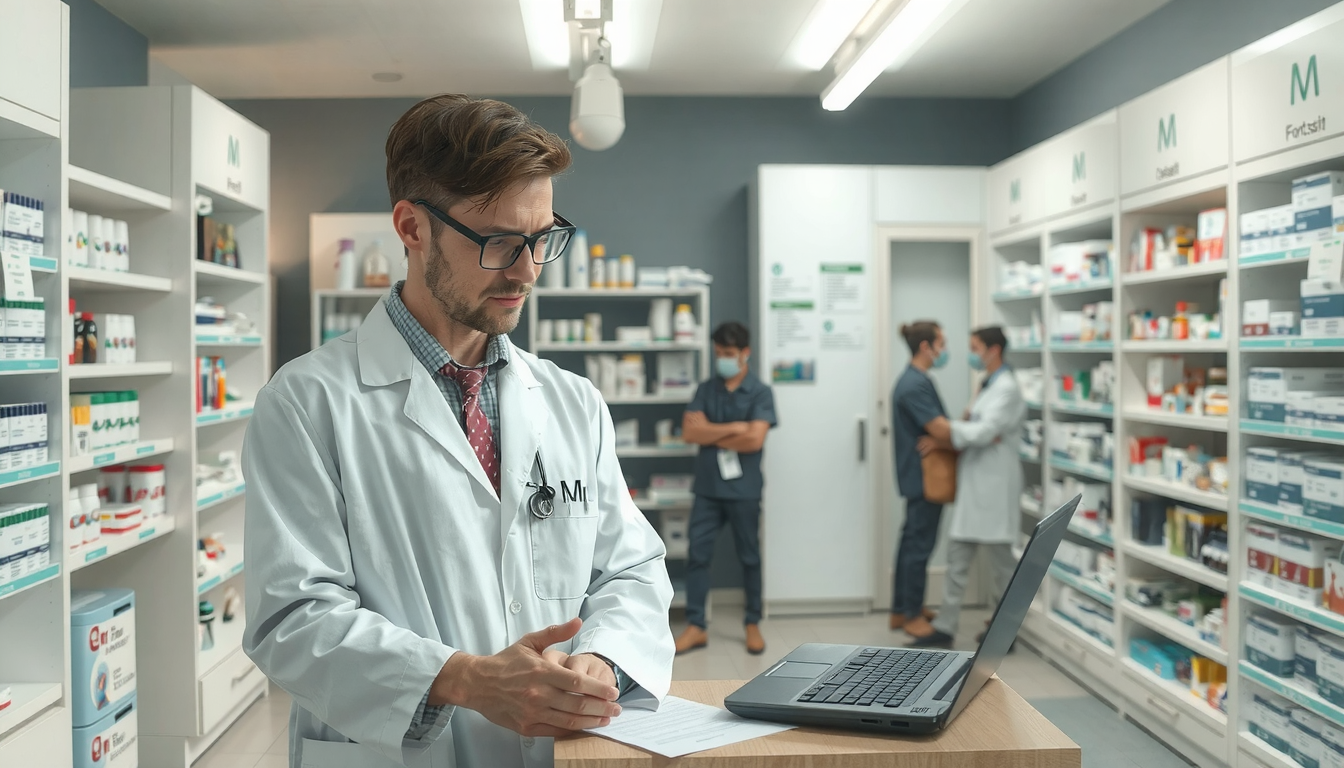
A key part of this is the physical layout and atmosphere. Strategic pharmacy design can guide patient flow, highlight profitable over-the-counter sections, and create a sense of professionalism and care. Consider these improvements:
* Digital Signage: Use screens to promote health services, announce flu shot availability, or feature high-margin over-the-counter products.
* Private Consultation Areas: A dedicated, comfortable space for medication counseling or vaccinations signals professionalism and respect for patient privacy.
* Staff Training: Train your team to be proactive, greet patients by name, and offer assistance. As noted in an article on in-pharmacy marketing ideas, knowing your audience and meeting their needs in advance is crucial for creating a positive experience.
4. Build a 5-Star Reputation with Online Reviews
Social proof is extremely important in healthcare. A steady stream of positive reviews on platforms like Google, Yelp, and Healthgrades is one of the most powerful trust signals you can generate. You must have a systematic, ethical process for encouraging reviews.
Develop a simple script for your technicians and pharmacists to use at checkout with patients who have had a positive experience. For example: “Mrs. Jones, we’re so glad we could help you today. Would you be willing to share your experience on Google? It really helps other patients in the community find us.” Make it easy by providing a QR code or a link on the receipt.
Category 2: Growth Marketing (The 4 Ideas to Attract New Patients)
Once your foundation is solid, the next step is active patient acquisition. These strategies are designed to reach new audiences in your service area and persuade them to switch to your pharmacy.
5. Run Targeted Digital Ads (Google & Facebook)
Paid digital advertising lets you reach specific demographics with precision. Go beyond simply “boosting” a Facebook post. Invest in well-structured campaigns on Google Ads and Meta (Facebook/Instagram).
- Google Ads: Bid on keywords like “pharmacy in [Your Zip Code],” “24-hour pharmacy [Your Town],” or “compounding pharmacy near me.” This captures users with high intent.
- Facebook Ads: Target users based on location, age, and interests. For example, run a campaign promoting children’s vitamins to parents of young children in your service area. Or target seniors during Medicare Open Enrollment.
6. Build Strategic Community & Provider Partnerships
Your strongest allies are other local businesses and healthcare providers. Building a referral network is a sustainable, low-cost way to generate a steady stream of new, high-quality patients.
- Provider Outreach: Systematically visit or contact local doctors’ offices, dentists, and urgent care clinics. Give them referral pads and information about your unique services (like free delivery, special packaging).
- Community Alliances: Partner with senior centers, gyms, real estate agents (to include in new homeowner packets), and local businesses to cross-promote services.
7. Create Expert Health Content (Blog & Video)
Become the go-to health expert in your community by creating content that answers common patient questions. This fuels your local SEO strategy and builds immense trust. The goal is to be the top search result when someone in your town Googles a health-related question.
- Blog Posts: Write articles on topics like “How to Choose the Right Vitamin D Supplement,” “Understanding the New Shingles Vaccine,” or “Tips for Managing Flu Season in [Your Town].”
- Short-Form Video: Use Instagram Reels or TikTok to create 60-second videos introducing your staff, explaining how medication sync works, or giving a quick tour of your pharmacy.
8. Host In-Store or Virtual Health Workshops
Hosting educational events positions your pharmacy as a community health hub, not just a dispensary. These events drive foot traffic (or virtual engagement), generate goodwill, and provide a perfect opportunity to showcase your expertise and special services.
Potential topics include:
* Managing Diabetes 101
* Navigating Medicare Part D
* Heart Health & Blood Pressure Basics
* Nutritional Supplements for Active Seniors
Category 3: Retention Marketing (The 4 Ideas for Building Loyalty)
Getting a new patient can cost five times more than keeping an existing one. These strategies focus on increasing the lifetime value of your current patient base, building loyalty, and turning satisfied customers into vocal advocates.
9. Start a Patient Loyalty & Referral Program
Modern loyalty programs go beyond generic punch cards. They should be integrated with your point-of-sale system to reward valuable actions and encourage referrals. According to an analysis by Drug Topics, effective programs reward customers for bringing in a referral card, not just for making a purchase, which broadens the program’s appeal.
- Points-Based System: Patients earn points for every dollar spent on over-the-counter items, for each prescription filled, and for referring a new patient. Points can be redeemed for discounts.
- VIP Tiers: Offer escalating benefits (like a dedicated phone line, one free delivery per month) as patients reach certain spending or loyalty milestones.
10. Use Personalized Email & SMS Marketing
Direct, personalized communication is a powerful retention tool. Using a HIPAA-compliant marketing platform, you can engage patients without being intrusive.
- Automated Reminders: Send automated SMS or email reminders for prescription refills.
- Targeted Promotions: Email a coupon for allergy medication to patients who have previously filled allergy prescriptions.
- Value-Add Content: Send a monthly newsletter with a link to your latest health blog post, staff introductions, or news about a new service.
11. Market Your Special Clinical Services
Many independent pharmacies offer valuable clinical services but fail to market them effectively. Don’t assume patients know about them. Create dedicated marketing campaigns for each high-value service. This is your primary advantage against large chain pharmacies.
Focus on services like:
* Medication Sync (Med Sync): Market the convenience of a single monthly pickup.
* Custom Compounding: Target local dermatologists or veterinarians who prescribe compounded medications.
* Point-of-Care Testing: Promote rapid tests for flu, strep, or COVID-19.
* Vaccination Clinics: Run campaigns well ahead of flu season or for back-to-school immunizations.
12. Offer Unmatched Convenience (Delivery & App)
In 2026, convenience is a non-negotiable expectation. If you offer services that make patients’ lives easier, you must market them aggressively.
Prominently feature these conveniences on your website, in-store signage, and social media:
* Free Local Delivery: This is one of the most powerful competitive advantages an independent can have.
* Curbside Pickup: A simple but highly valued service.
* Mobile App: If you have an app for refills and communication, promote its download at every opportunity. The key is to highlight the personal touch and reliability that comes with your pharmacy’s convenience services, which large, impersonal platforms cannot replicate.
Digital vs. Traditional Pharmacy Marketing: A 2026 Cost-Benefit Analysis
Deciding where to allocate your marketing budget is a critical decision. This table provides a clear comparison of common digital and traditional tactics based on cost, precision, and measurability. Industry data shows a clear trend towards digital for its superior ROI tracking and targeting capabilities.
| Tactic | Average Monthly Cost | Targeting Precision | Measurability (ROI) | Best For… |
|---|---|---|---|---|
| Digital: Google Ads | $300 – $1,500+ | Very High (zip code, keyword) | Very High (cost-per-click, conversion tracking) | Immediate new patient acquisition. |
| Digital: Content/SEO | $200 – $1,000 | High (topic relevance) | Medium (organic traffic, rankings) | Long-term, sustainable growth & authority. |
| Traditional: Direct Mail | $1,000 – $5,000 | Medium (zip code) | Low (requires coupon codes to track) | Grand openings, promoting a specific event. |
| Traditional: Radio/Print | $1,500 – $7,000+ | Very Low (broad audience) | Very Low (difficult to attribute) | Building broad brand awareness in a large market. |
Your 6-Month Pharmacy Marketing Launch Plan
This actionable timeline provides a step-by-step process for implementing a modern marketing strategy from the ground up. This plan is ideal for established pharmacies looking to revamp their marketing or for entrepreneurs getting ready to Open a Pharmacy.
- Month 1: Foundation. Fully optimize your Google Business Profile. Set up a basic, professional website with a prominent online refill form. Begin systematically asking every satisfied patient for an online review.
- Months 2-3: Content & Community. Write and publish your first four blog posts answering common patient questions. Identify and make initial contact with five potential community partners (like local doctor’s offices, senior centers).
- Month 4: Launch & Engage. Launch your first low-budget Google Ad campaign targeting your primary zip code with a small budget ($10-$15/day). Host your first in-store or virtual health workshop.
- Month 5: Retention. Design and implement a simple loyalty and referral program. Start collecting patient emails and mobile numbers (with consent) at checkout for your communication list.
- Month 6: Analyze & Optimize. Review your Google Analytics, Google Business Profile Insights, and ad performance. Which channel drove the most new patient calls or refill requests? Double down on what works and pause what doesn’t.
Frequently Asked Questions (FAQ)
Q: What is the most cost-effective marketing idea for a new pharmacy?
A: The single most cost-effective marketing idea is to completely claim and optimize your Google Business Profile (GBP). It is free to set up and manage, and it is the primary way local patients will find you through searches like “pharmacy near me.” Fully completing your profile, adding high-quality photos, and actively encouraging patient reviews will provide the highest return for the lowest financial investment. Many other low-cost ideas, like creating new patient kits or window graphics, can also be highly effective.
Q: How much should a pharmacy spend on marketing?
A: According to industry benchmarks for small businesses, an established pharmacy should allocate between 3-5% of its total revenue to marketing efforts. However, a new pharmacy or one in a highly competitive market may need to invest a higher percentage, typically 7-10%, during the first one to two years to build initial brand awareness and establish a solid patient base.
Q: Can I use social media like TikTok to market my pharmacy?
A: Yes, but it must be done strategically and professionally. Instead of participating in viral trends, use short-form video platforms like TikTok or Instagram Reels to provide tangible value. Create content that introduces your staff (“Meet Pharmacist John”), gives a behind-the-scenes look at a service like custom compounding, or offers quick, evidence-based health tips. The key is to remain authoritative, professional, and strictly compliant with HIPAA privacy regulations.
Q: Is direct mail still effective for pharmacies in 2026?
A: Direct mail’s effectiveness has become highly situational. It is no longer a cost-effective tool for general brand awareness compared to digital channels. However, it can be very effective for highly targeted campaigns with a clear call to action. For example, sending postcards to a specific neighborhood to announce a grand opening, a new free delivery service, or a special vaccination clinic can yield a positive ROI. It can also be useful for reaching demographics that are less digitally active, such as some senior populations.
Written by Steven Guo. Steven Guo is an industry expert in retail strategy and commercial environments. He specializes in helping businesses, including pharmacies, optimize their physical space and operational efficiency through effective retail fixture manufacturing, store layout design, and commercial material selection.
- Methodology: The 12 strategies in this guide were selected and ranked based on a composite score considering ROI potential, implementation cost, and proven effectiveness from industry case studies and NCPA survey data.
- Data Source: Statistics are cited from the National Community Pharmacists Association (NCPA), Google Ads performance benchmarks, and internal analyses of pharmacy marketing trends.









 English
  Arabic