
Running a successful pharmacy in 2026 is about more than just healthcare. It is equally about following the law and professional rules. Pharmacy compliance means following all federal, state, and local laws that govern how a pharmacy operates. Strong pharmacy compliance protects your patients and your business. It keeps your license and reputation safe. It prevents serious legal and financial trouble.

With over 44,000 pharmacies in the US, government agencies watch closely. They want to ensure safety and quality care. This guide breaks down key regulatory areas. It provides a pharmacy regulations checklist. It offers strategies for staying compliant.
Key Takeaways
* Pharmacy compliance involves following all laws and standards from agencies like the DEA, FDA, and State Boards of Pharmacy.
* Key areas include controlled substances, patient privacy (HIPAA), and drug supply chain security.
* Regular self-audits using a detailed pharmacy regulations checklist are essential. They help find and fix problems before an official inspection.
* Common mistakes include poor record-keeping, lack of ongoing staff training, and mishandling of controlled substances.
* Technology like pharmacy management systems and compliance software can help. They automate tasks and reduce human error. This makes staying compliant easier.
The Pillars of Pharmacy Compliance: Key Areas
To master pharmacy compliance, you must understand who makes the rules. Several agencies create the web of regulations that pharmacies follow. Knowing their roles helps you manage your duties.
Federal Oversight: The Big Three
Three main federal bodies set nationwide standards for pharmacies.
Drug Enforcement Administration (DEA)
The DEA focuses on controlled substances (Schedules II-V). Its goal is to prevent these powerful drugs from being misused or diverted.
* Ordering: You must use the Controlled Substance Ordering System (CSOS) for electronic orders of Schedule I and II drugs.
* Inventory: A complete and accurate count of all controlled substances must be done at least every two years.
* Record-Keeping: Every dose must be tracked from the moment it enters the pharmacy until it leaves.
* Prescription Validity: Pharmacists must ensure every controlled substance prescription is real.
* Diversion: You must have systems to detect and report any theft or loss of controlled drugs.
Food and Drug Administration (FDA)
The FDA’s role is to ensure the safety of the nation’s drug supply. For pharmacies, this involves several key areas.
* Drug Supply Chain Security Act (DSCSA): This law requires pharmacies to trace drugs as they move through the supply chain. You must only accept drugs from authorized trading partners. You must be able to provide transaction data.
* Adverse Event Reporting: Pharmacies must have a process to report negative patient reactions to drugs. This is done through the FDA’s MedWatch program.
* Repackaging and Compounding: If your pharmacy repackages or compounds drugs, you must follow specific FDA rules on labeling and safety.
Health Insurance Portability and Accountability Act (HIPAA)
HIPAA protects sensitive patient health information (PHI). Pharmacy compliance depends heavily on following its rules.
* Privacy Rule: This sets limits on how PHI can be used and shared.
* Security Rule: This requires pharmacies to protect electronic PHI with specific technical and physical safeguards.
* Breach Notification: You must have a clear plan to notify patients and the government if a data breach occurs.
* Staff Training: All employees must be trained on HIPAA policies and procedures.
State Boards of Pharmacy (BOP)
While federal laws set a baseline, your State Board of Pharmacy is your main regulator. BOP rules can vary greatly from state to state. This creates a complex web of overlapping federal and state regulations.
Key areas governed by your BOP often include pharmacist-to-technician ratios. They also include rules for transferring prescriptions and continuing education (CE) requirements. They conduct routine inspections to ensure pharmacy compliance.

| Regulatory Body | Primary Focus | Key Compliance Areas for Pharmacies |
|---|---|---|
| DEA | Controlled Substances | Inventory, Record-Keeping, Security, Prescription Validation |
| FDA | Drug Safety & Supply Chain | DSCSA, Adverse Event Reporting, Labeling |
| HIPAA | Patient Privacy | PHI Protection, Security Audits, Staff Training |
| State BOP | Licensing & Practice Standards | Operations, Staff Ratios, CE, State-Specific Rules |
| USP | Compounding Quality | Standards for non-sterile (<795>), sterile (<797>), and hazardous (<800>) drugs |
Compounding and Quality Standards (USP)
The U.S. Pharmacopeia (USP) sets quality standards for compounded medications. If your pharmacy prepares custom medications, following these standards is critical for pharmacy compliance.
USP Chapter <795> covers non-sterile compounding. USP Chapter <797> sets the rules for sterile compounding to prevent contamination. USP Chapter <800> provides standards for safely handling hazardous drugs to protect staff.
The Ultimate Pharmacy Regulations Checklist: A Self-Audit
A proactive self-audit is your best defense against compliance violations. This pharmacy regulations checklist guides you through a self-inspection to find and fix issues. Think of it as a dress rehearsal for a real inspection.
Step 1: Licensing and Documentation Audit
Start with the paperwork. Inspectors always check licenses and records first.
* Are the pharmacy license and all pharmacist licenses current and displayed for the public?
* Are all pharmacy technician registrations up to date?
* Are continuing education (CE) records for all licensed staff complete and easy to access?
* Have all policy and procedure manuals been reviewed and signed within the last year?
Step 2: Controlled Substance Management Audit
DEA compliance is a high-risk area. A small mistake here can lead to big problems.
* Conduct a surprise inventory count for a few key Schedule II drugs. Does the count match your records?
* Review your electronic CSOS orders. Compare them to the invoices and drugs received.
* Check that your paper DEA Form 222s are filled out perfectly. Make sure there are no blank fields or errors.
* Pull a sample of controlled substance prescription records. Do they have the patient’s full address, the prescriber’s DEA number, and a valid signature?
Step 3: Premise, Security, and Storage Inspection
Your pharmacy’s physical space is part of your compliance system. Evaluate your security measures. This includes alarms, cameras, and who has access to the pharmacy. Check that the pharmacy layout helps staff work safely and protects patient privacy at the counter.
Ensure your drug storage areas maintain the correct temperature and humidity. This includes refrigerators and freezers. A well-planned layout is key to both workflow and security. For new pharmacies or remodels, professional pharmacy design services can build compliance requirements into the floor plan from the start.

Step 4: Patient Data & Privacy Assessment
Protecting patient data is a non-negotiable part of modern pharmacy compliance.
* Are computer monitors positioned so that waiting customers cannot see patient information?
* Is all paper waste with patient information being shredded before disposal?
* If staff access the pharmacy system from home, is that connection secure?
* Do you have a clear, documented process for giving patients copies of their medical records when they ask?
Step 5: Staff Training and Competency Check
Your staff are your first line of defense. Ensuring they are well-trained is essential.
* Review your training files. Is there proof that every employee has completed training on HIPAA, fraud, waste, and abuse, and safety procedures?
* Ask a technician to explain the steps they would take if they received a prescription that seemed fake.
* If you perform compounding, confirm that all staff involved have passed their required training. They should have skill tests for USP <797> or <800>.
Common Compliance Pitfalls and How to Avoid Them
Even dedicated pharmacies can make mistakes. Knowing the common pitfalls helps you avoid them. It strengthens your pharmacy compliance program.
Inadequate Record-Keeping
The Problem: Missing, incorrect, or disorganized records are one of the most common violations found during inspections. This includes prescription files, inventory logs, and training documents.
The Solution: Comprehensive record-keeping practices are the foundation of good compliance. Create a policy to “document everything.” Use digital systems to keep records organized. Perform regular internal checks to ensure nothing is missed.
Staff Training Deficiencies
The Problem: Many pharmacies provide training only when an employee is first hired. But rules change, and people forget.
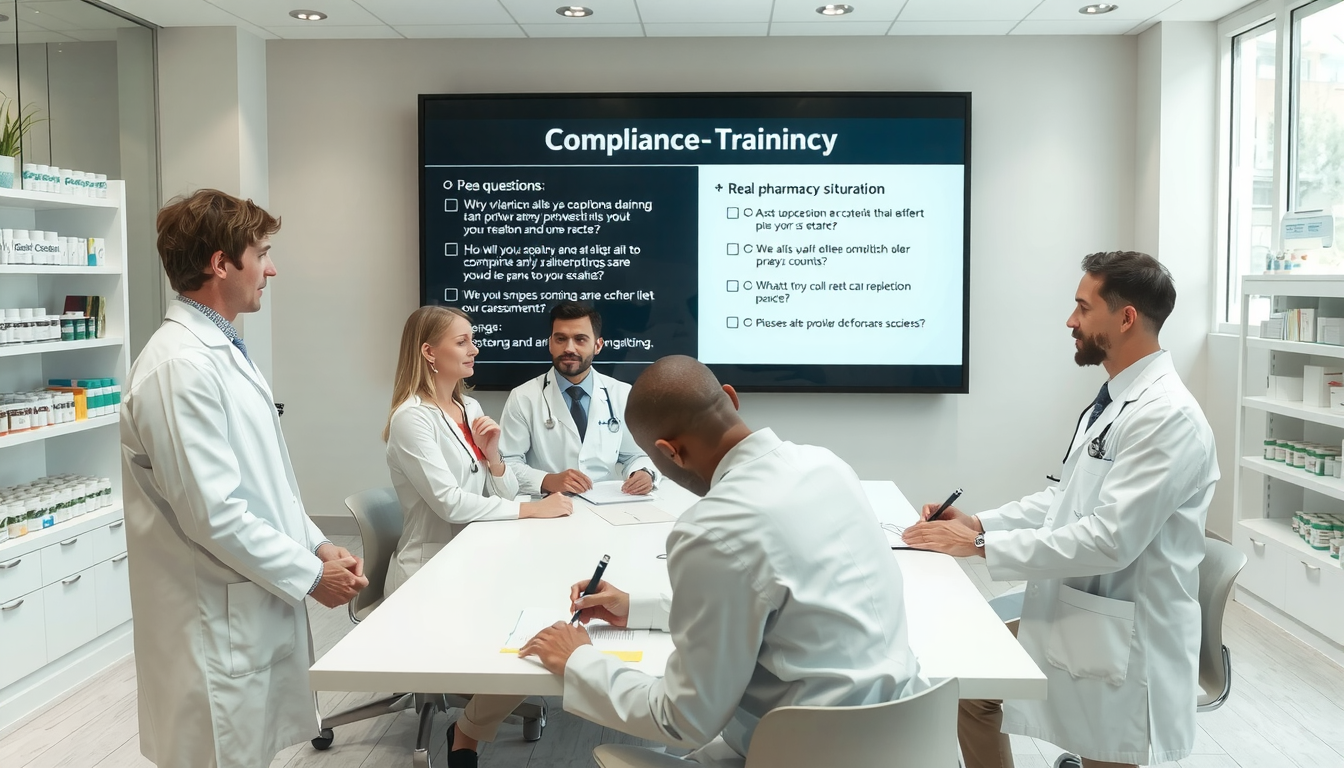
The Solution: Make training an ongoing process. Schedule short, regular training sessions on key compliance topics. Use real-world examples and quizzes to make sure your team understands the material. Don’t just make sure they sat through it.
Ignoring State-Specific Nuances
The Problem: A pharmacy chain might use the same policies in Texas and New York. They don’t realize the rules are different. This is a recipe for failure.
The Solution: Before you Open a Pharmacy, you must study the specific regulations from that state’s Board of Pharmacy. Create special additions to your main policy manual for each state you operate in.
Improper Controlled Substance Handling
The Problem: Simple errors in counting inventory can lead to severe penalties. Failing to report a loss quickly using DEA Form 106 is another issue. Using the wrong disposal method is also problematic.
The Solution: Make one trusted staff member the lead for controlled substance compliance. Train them well and give them the time to do it right. Use a certified “reverse distributor” to handle expired controlled drugs. Keep perfect records of everything you send them.
Leveraging Technology for Sustained Compliance
Staying compliant in 2026 can feel overwhelming. Luckily, technology offers powerful tools to manage the load. It improves accuracy and makes your pharmacy compliance efforts more efficient.
Automating Records and Reports
Modern Pharmacy Management Systems (PMS) are more than just dispensing tools. They automatically create a digital trail for every prescription, inventory change, and patient note. This creates a clear audit trail that is easy to search and review. This is a huge help during an inspection.
The Rise of Compliance Software
Specialized software can help you manage compliance digitally. These platforms act as a central hub for your entire compliance program.
* They store all your policies and procedures in one place. This ensures everyone uses the most current version.
* They can send automatic reminders for important deadlines. This includes license renewals or required staff training.
* They provide tools to manage and document your self-audits. This makes it easy to track and fix any issues you find.
Digital Training and Tracking
Instead of paper sign-in sheets, Learning Management Systems (LMS) can manage your staff training program. You can assign online courses for HIPAA or USP standards. You can track each employee’s progress and store their completion certificates digitally. This creates a complete training record that is always ready for an inspector to review.
Frequently Asked Questions (FAQ)
What are the most common pharmacy compliance violations?
The most common violations often involve poor record-keeping for controlled substances. Other issues include incorrect drug labeling and breaches of patient privacy (HIPAA). Other frequent issues include having expired drugs on the shelf and not meeting state-specific rules, like technician-to-pharmacist ratios.
How often should a pharmacy conduct a self-audit?
A full, top-to-bottom self-audit using a detailed pharmacy regulations checklist should be done at least once a year. However, high-risk areas like controlled substance inventory and patient privacy should be reviewed more often. This could be quarterly or even monthly.
What is the role of the Pharmacist-in-Charge (PIC) in compliance?
The PIC is the person legally responsible for ensuring the pharmacy follows all federal and state laws. Their duties include creating and enforcing policies, training staff, and overseeing all drug handling. They also act as the main contact during a Board of Pharmacy inspection. Strong leadership from the PIC is key to a culture of compliance.
How can a pharmacy stay updated on changing regulations?
Staying current requires effort. Subscribe to newsletters from your State Board of Pharmacy and the National Association of Boards of Pharmacy (NABP). Check the DEA and FDA websites regularly for updates. Joining professional groups like the NCPA or APhA also provides valuable information and training on pharmacy law.
What are the potential consequences of non-compliance?
The consequences vary based on the mistake. A minor error might result in just a warning. But serious violations can lead to large fines. They can cause suspension or loss of the pharmacy’s license. You could be kicked out of Medicare and Medicaid. There could even be criminal charges for the owners and staff involved.








 English
  Arabic