
Starting or upgrading a pharmacy in 2026 needs careful planning. Your most important assets are the equipment and fixtures. The right tools and layout directly affect your pharmacy’s efficiency, patient safety, and profits. This guide gives you a complete pharmacy equipment list. It covers everything from basic dispensing tools to the vital pharmacy fixtures and shelving that shape your space. We’ve broken it down into clear categories. This helps you plan and budget well.
Key Takeaways
- Plan by Pharmacy Type: Your equipment needs will vary. It depends on whether you run a retail, compounding, or hospital pharmacy.
- Focus on Core Equipment: Start with a reliable Pharmacy Management System (PMS), dispensing tools, and proper medication storage.
- Fixtures Define Workflow: Smart selection of pharmacy fixtures and shelving is key for staff efficiency and patient experience.
- Budget Wisely: Consider new, refurbished, and leased equipment options to manage costs. Automation is a long-term investment.
- Compliance is Key: Make sure all equipment and fixtures meet state board, DEA, and HIPAA requirements.
First, Understand Your Pharmacy’s Core Needs
Before you start buying, think about your specific business model. A one-size-fits-all pharmacy equipment list doesn’t exist. Your needs will differ based on the services you plan to offer.
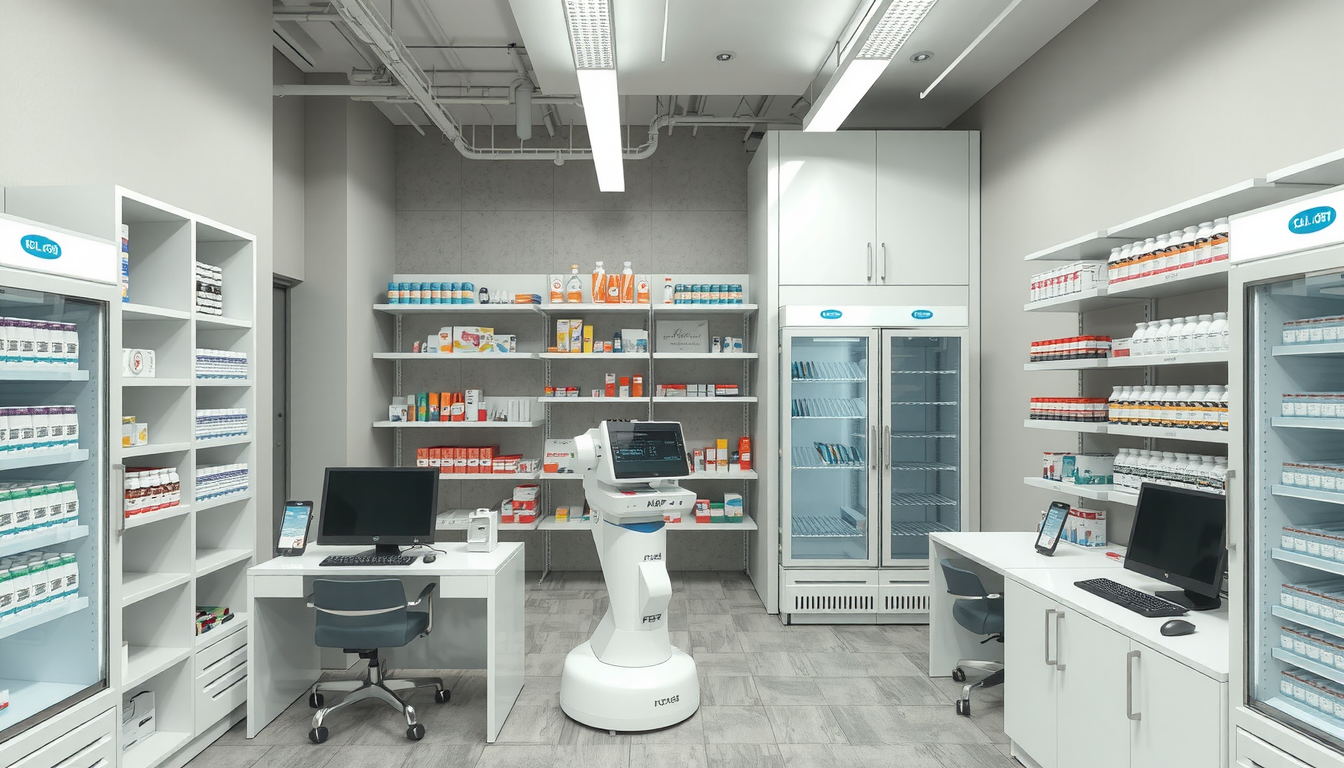
A retail or community pharmacy focuses on high-volume dispensing. They also sell over-the-counter (OTC) products and provide customer service. A compounding pharmacy needs specialized, precise equipment. This equipment creates custom medications. Hospital pharmacies focus on unit-dose dispensing and sterile preparations. They also integrate with large information systems. Many modern pharmacies are hybrid models. They combine parts of each type.
The Strategic Pharmacy Equipment Checklist: From Core Essentials to Advanced Tech
This section gives you a practical, actionable pharmacy equipment list. We have grouped items by function. This helps you prioritize purchases and build your budget. This checklist is a great starting point for any new or renovating pharmacy.
Category 1: Prescription Dispensing & Fulfillment Equipment (Must-Haves)
This equipment is the heart of your daily operations. For each item, consider factors like speed, accuracy, and ease of use.
- Pharmacy Management System (PMS): This is the digital brain of your pharmacy. It manages patient profiles, inventory, billing, and prescription processing.
- Computers, Monitors, and Printers: You will need reliable workstations for your staff.
- Label Printers: Essential for printing clear and compliant prescription, warning, and pricing labels.
- Barcode Scanners: Used for verifying prescriptions, managing inventory, and at the point of sale.
- Pill/Tablet Counters: These range from simple manual trays to fully automated machines. Automated counters increase speed and accuracy but cost more.
- Scales (Class A Balance or Electronic): A highly accurate scale is required for measuring small quantities of ingredients.
- Counting Trays & Spatulas: These are the basic tools for manual pill counting. Even with automation, you will still need them.
- Graduated Cylinders, Beakers, and Funnels: For accurately measuring liquids for suspensions or other compounds.
- Mortars and Pestles: Used for crushing tablets to make special preparations. These help patients who cannot swallow pills.
- Ointment Pads/Slabs: Provide a clean surface for mixing creams and ointments.
- Reference Materials: Access to digital or physical drug information databases like the USP-NF is required. These tools are so basic that they are key parts of many state-level pharmacy technician equipment lists.
Category 2: Compounding and Sterile Preparation Equipment (Specialized)
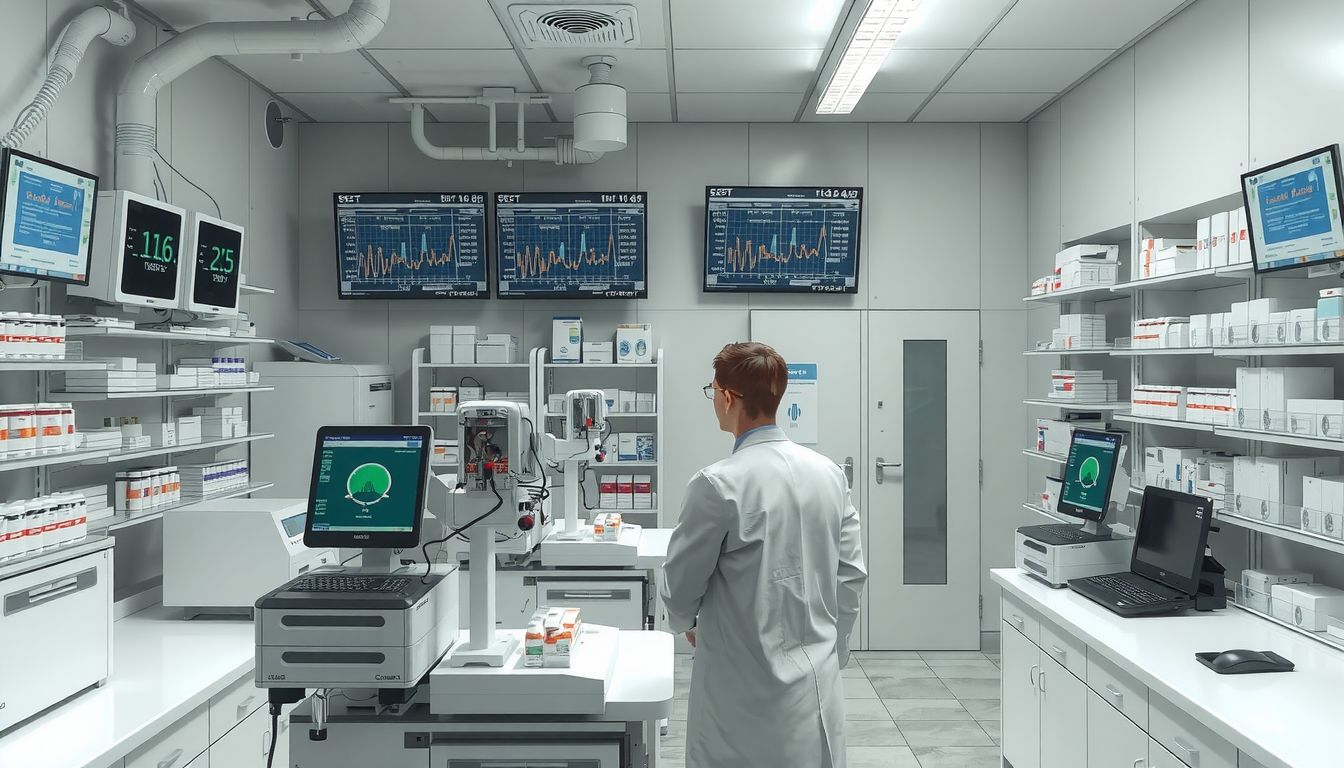
This equipment is only needed if you plan to offer specialized compounding services. It represents a big investment. It also requires strict compliance with standards like USP <795> and <797>.
- Compounding Hoods: These enclosed spaces, like powder containment hoods, protect the technician. They prevent inhaling drug particles and stop cross-contamination.
- Pharmacy Isolators and Clean Rooms: For handling sterile or hazardous drugs, this equipment creates a highly controlled environment. As noted in guides to Essential hospital pharmacy equipment, isolators are sealed boxes. They allow pharmacists to work safely.
- Electronic Mortar and Pestle (e.g., Unguator): These machines automate the mixing of creams and ointments. This creates a smooth, consistent final product.
- Autoclaves/Sterilizers: Used to sterilize equipment and containers for sterile compounding.
- Hot Plates with Magnetic Stirrers: Needed for preparations that require heating and continuous mixing.
Category 3: Storage & Refrigeration
Proper storage is not just about organization. It is about maintaining medication integrity and safety. Temperature control is critical.
- Pharmaceutical-Grade Refrigerators: Unlike home refrigerators, these maintain very stable temperatures. They have alarms to alert you of any changes. This is required for storing items like insulin and many vaccines.
- Freezers: Required for certain vaccines and biologic drugs that must be kept frozen.
- Temperature Monitoring Systems: Automated systems that continuously log temperatures. They send alerts if they go out of range. This ensures compliance and product safety.
- Secure Cabinets/Safes: A DEA-compliant safe or steel cabinet is required. This stores controlled substances (CII-CV).
Category 4: Administrative, POS, and Safety Equipment
This is the equipment that keeps your business running smoothly, securely, and in compliance with regulations.

- Point-of-Sale (POS) System: Integrates with your PMS for seamless checkout. It handles payments and tracks OTC sales.
- Phone System/Communication Tools: A multi-line phone system is crucial. It handles calls from patients and doctors.
- Fax Machine (or e-fax service): Despite being old technology, faxing is still common. Many doctors’ offices use it to send prescriptions.
- Document Shredder: A cross-cut shredder is necessary to securely destroy documents. These contain protected health information (PHI) and maintain HIPAA compliance.
- Security System: Cameras and alarms are essential. They protect your inventory and premises.
- Fire Extinguishers: Must be placed in accessible locations as required by local fire codes.
Designing for Success: A Guide to Pharmacy Fixtures and Shelving
The right pharmacy fixtures and shelving are more than just furniture. They are a strategic part of your business. They influence workflow, ensure compliance, and shape the customer experience. A poor layout can cause bottlenecks. It can increase dispensing errors and create a frustrating environment for both staff and patients.
How Fixtures Define Your Workflow
Think about the path a prescription takes from drop-off to pick-up. An efficient layout minimizes the steps your team needs to take. Many owners make the mistake of placing drop-off and pick-up windows too close. This causes customer crowding. Another common error is failing to create a truly private space for patient consultations.
An efficient layout is key. Working with a professional with experience in pharmacy design can help you optimize your space. This improves staff productivity and smooth customer flow. A thoughtful design considers the entire workflow triangle. This goes from prescriber communication to pharmacist verification to patient hand-off.
The Essential Pharmacy Fixtures Checklist
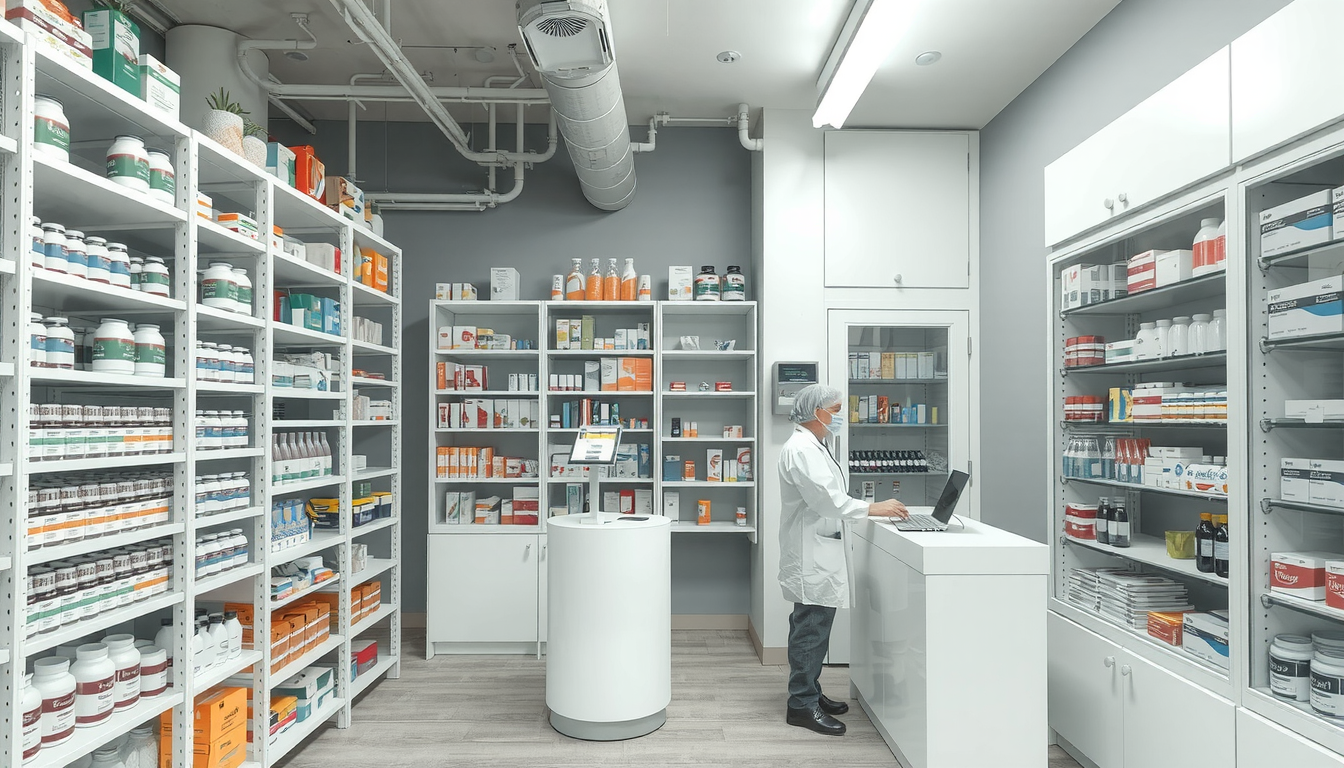
Your choice of pharmacy fixtures and shelving should support your daily tasks. Here is a breakdown of essential items. This covers both the dispensary and the front-end retail area.
| Fixture Type | Location | Key Considerations |
|---|---|---|
| Rx Bays/Workstations | Dispensary | Ergonomic design to reduce staff fatigue; adequate counter space. |
| Under-Counter Units | Dispensary | Drawers and shelving for fast-moving drugs, keeping them in easy reach. |
| Prescription Bins/Will-Call | Dispensary | An organized system (bags, bins, or drawers) for completed prescriptions. |
| Gondola Shelving (Rx) | Dispensary | High-density shelving for storing bulk prescription stock bottles. |
| OTC Shelving | Front-End | Standard gondola or wall units. Must be easy for customers to navigate. |
| End Caps | Front-End | Prime promotional space at the end of aisles for seasonal or high-margin items. |
| Checkout Counters | Front-End | Must be ADA-compliant and have space for your POS system and impulse-buy items. |
| Consultation Area/Room | Front-End | A private, quiet space to comply with HIPAA and provide clinical services. |
| Waiting Area Seating | Front-End | Comfortable seating for customers waiting for their prescriptions. |
Material, Durability, and Compliance
When selecting the pieces for your pharmacy equipment list, think about the long term. Fixture materials like laminate, metal, and wood all have different benefits. Laminate is easy to clean and cost-effective. Metal is durable and modern. Wood can provide a warm, high-end feel.
Above all, surfaces should be non-porous and easy to sanitize. Look for modular pharmacy fixtures and shelving that can be adjusted. This helps as your inventory or services change. This flexibility will save you money and headaches in the future.
Budgeting and Sourcing Your Pharmacy Equipment
Putting together a realistic budget is a critical step. You need to decide whether to buy new, refurbished, or leased equipment.
Creating a Realistic Budget: New vs. Refurbished vs. Leased
New equipment comes with a full warranty and the latest technology. But it costs the most. Refurbished equipment from a reputable dealer can offer big savings. But be sure to check the warranty and support terms. Leasing can lower your upfront cost. But it may be more expensive over the life of the equipment. Always get multiple quotes before making a final decision.
Certain investments, while large, can offer a great return. For example, automation like robotic dispensers can be a big upfront cost. They sometimes range from $50,000 to over $200,000. However, they can provide long-term ROI. They free up pharmacist time for revenue-generating clinical services.
Vetting Suppliers and Considering Long-Term Support
When choosing a supplier, look beyond the price tag. A good partner will offer installation, staff training, and ongoing maintenance support. This is especially important for complex systems like your PMS or automated dispensers. Reviewing comprehensive pharmaceutical equipment guides from potential suppliers can give you insight. You’ll learn about their expertise and product range.
FAQ: Your Pharmacy Equipment Questions Answered
Here are answers to some common questions about building your pharmacy equipment list.
What is the most essential piece of equipment for a new pharmacy?
While every piece is important, the Pharmacy Management System (PMS) is the most critical. It is the central nervous system of your entire operation. It handles everything from patient records and inventory to billing and prescription processing. Without a reliable PMS, modern pharmacy practice is nearly impossible.
How much should I budget for a basic pharmacy equipment list?
This varies widely based on location, pharmacy size, and service scope. A very rough estimate for a small, new retail pharmacy’s essential equipment can range from $20,000 to $50,000 in 2026. This excludes fixtures and major automation. This does not include specialized compounding equipment, which can add tens of thousands more.
What’s the difference between retail shelving and pharmacy fixtures?
Retail shelving (like gondolas) is for displaying OTC products to customers. Pharmacy fixtures are more specialized. They are designed for the dispensary’s workflow. This includes Rx workbenches, secure under-counter storage for drugs, and will-call bin systems. These are designed for operational efficiency and security.
Do I need an automated dispensing machine to start?
No, it is not a day-one essential for most small pharmacies. While robotic dispensers improve efficiency and accuracy, they are a big capital investment. Many pharmacies start with manual or semi-automated counting methods. They invest in full automation as their prescription volume grows.
How can I ensure my equipment and fixtures are compliant?
Compliance involves several areas. For equipment, ensure scales are calibrated. Make sure refrigerators meet pharmaceutical-grade standards. For fixtures, ensure your controlled substance safe meets DEA requirements. Your layout must also allow for patient privacy (HIPAA) and accessibility (ADA). Consulting with your state’s Board of Pharmacy and a specialized design firm is highly recommended.
Conclusion: Your Blueprint for a Well-Equipped Pharmacy
A well-planned pharmacy equipment list is the blueprint for an efficient, safe, and profitable business. Use this guide as a starting point for your detailed planning. Now that you have a blueprint for your equipment, the next step is to understand the entire business journey. Learn more about how to Open a Pharmacy.








 English
  Arabic