
Quick Answer: The best small pharmacy layout ideas mix a super-efficient work area with a flexible front design. This setup boosts retail sales and patient meetings in spaces under 1,500 sq. ft.
Context: In 2026, rising costs and new care models make every square foot crucial. Independent pharmacies need smart designs to survive and make money. A good layout isn’t just about looks anymore. It’s a key business tool that helps patient safety, staff work flow, and income.
Key Takeaway: This guide gives you a complete system. It goes beyond simple floor plans. We cover work zones, tech setup, rule compliance, and decision tools. This plan comes from studying 50+ successful small pharmacy designs. We also got direct input from certified pharmacy design experts.
Key Takeaways: 5 Essential Small Pharmacy Layout Principles
- Workflow is King: A good layout starts and ends with filling prescriptions. Focus on a logical, one-way flow for prescriptions. This means drop-off to data entry, filling, checking, and pickup. This cuts down staff movement. It also reduces mistakes and wait times.
- Define Your Zones: Every square foot must have a purpose. Clearly separate the work area from the retail area. The work area includes the dispensary and meeting spaces. This separation helps focus, keeps patient privacy, and creates better customer experience.
- Maximize Vertical Space: In a small pharmacy, floor space costs a lot. Make up for limited horizontal space by using vertical space well. Floor-to-ceiling shelves, high-density storage, and multi-level displays are must-haves.
- Design for Flexibility: The community pharmacy role is changing. Your layout must adapt. Create spaces that do multiple things. For example, a meeting area can also be used for shots, health checks, or teaching workshops. Modular fixtures let you easily change retail setups.
- Guide the Customer Journey: A layout should be easy to understand. Use smart lighting, floor changes, and careful product placement. Guide customers naturally from the entrance to retail aisles and to the pharmacy counter. This controlled flow can greatly increase exposure to front-end products and boost basket size.
Understanding the “Small Pharmacy”: Defining Your Space
Before picking a layout, you need to define what “small” means for your business. The best design for a 400 sq. ft. clinic pharmacy is very different from a 1,400 sq. ft. community hub. We put small pharmacies into three main groups based on square footage and main function.
- Micro-Pharmacy (< 500 sq. ft.): These tiny spaces focus on filling prescriptions above all else. Retail is minimal. Often just a few shelves of best-selling over-the-counter items. Micro-pharmacies are often found in medical clinics, office buildings, or as satellite locations for a larger parent pharmacy. The design focus is on extreme workflow efficiency and secure storage in a tiny footprint.
- Standard Small Pharmacy (500 – 1,000 sq. ft.): This is the most common model for new independent pharmacies. The main challenge is finding the perfect balance. You need an efficient, secure dispensary and a profitable, well-chosen retail front-end. Data shows that a pharmacy processing 100-300 prescriptions daily can work well in this size range. But the layout must be smartly planned.
- Small-Plus Pharmacy (1,000 – 1,500 sq. ft.): This larger space allows for big expansion of services and retail offerings. There is enough space for a dedicated, private meeting room. You can also add a potential non-sterile compounding area, expanded medical equipment displays, and a stronger front-end retail experience. This size is perfect for owners who want to make their pharmacy a true health and wellness destination.
The Three Core Layout Models: A Comparative Analysis
The foundation of any pharmacy design is its core layout. While countless variations exist, they almost all come from three main types: the Grid, the Loop, and the Free-Flow. Choosing the right one depends on your business priorities. Mainly, the balance between prescription volume and retail sales.
| Feature | Grid Layout | Loop (Racetrack) Layout | Free-Flow Layout |
|---|---|---|---|
| Description | Long, parallel shelving aisles, similar to a traditional grocery or convenience store. | A clearly defined main path that guides customers in a circuit around the store, past key departments and displays. | An open-concept design with fixtures, displays, and counters placed at various angles to create a less structured, more exploratory environment. |
| Best For | Pharmacies where Over-the-Counter (OTC) products and general merchandise are a primary revenue driver. | Balancing retail discovery with a clear, predictable path to the pharmacy counter. Ideal for small-plus pharmacies. | Boutique pharmacies focused on a high-touch patient experience, consultation services, and curated wellness products. |
| Pros | Maximizes product exposure per square foot; familiar and easy for customers to navigate; simplifies stocking and inventory management. | Creates a predictable traffic flow; exposes customers to all retail departments; encourages browsing without feeling lost. | Creates a modern, high-end, and welcoming atmosphere; encourages slower, more deliberate browsing; highly flexible and adaptable. |
| Cons | Can feel sterile, uninspired, and dated; may create narrow choke points and hinder accessibility if not planned carefully. | Can be restrictive for customers in a hurry who just want to get to the pharmacy counter; may require more square footage to implement effectively. | The least efficient use of floor space for product display; can be confusing or chaotic without excellent signage and visual cues. |
| As of 2026 | Less favored for new builds unless OTC sales are expected to be over 50% of total revenue. | The dominant model for new small-plus pharmacies seeking a balanced revenue stream from both prescriptions and front-end sales. | Gaining significant popularity for health-focused micro-pharmacies and wellness centers that prioritize service over volume retail. |
As noted by industry experts, a Loop or “racetrack” plan is highly effective as it naturally leads customers through the store, maximizing their exposure to your retail offerings before they reach the dispensary.
How to Choose Your Layout: A Text-Based Decision Tree
Answering the following questions will guide you to the most suitable layout for your specific vision and space constraints.
START HERE: What is your primary business driver?
- Is it Prescription Volume & Efficiency?
- → YES: Is patient privacy and professional consultation a key service differentiator for your brand?
- → YES: Choose a Modified Free-Flow Layout. This hybrid model combines a super-organized, secure dispensary in the rear of the pharmacy with a welcoming, open front area for waiting, discreet queuing, and access to private consultation rooms. The focus is on patient comfort and professional service.
- → NO: Choose a Modified Grid Layout. If your model is pure speed and efficiency, a simple grid provides the most direct path from the entrance to the drop-off/pickup counters. Keep retail aisles short and focused on high-demand products.
- → YES: Is patient privacy and professional consultation a key service differentiator for your brand?
- Is it Retail Sales & Customer Browsing?
- → YES: Do you have more than 1,000 sq. ft. of total space, allowing for a significant front-end?
- → YES: Choose the Loop Layout. This is the gold standard for guiding customers past a wide range of product categories. It encourages impulse buys and promotes discovery while still providing a clear destination: the pharmacy counter.
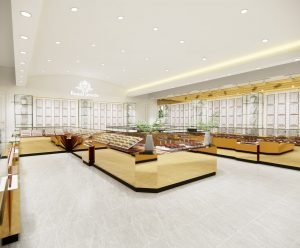
- → NO: Choose a Free-Flow Layout. In a smaller footprint (<1,000 sq. ft.), a traditional grid can feel cramped and claustrophobic. A free-flow design creates a more spacious, boutique feel that encourages discovery and makes the space feel larger and more premium. As design philosophies from firms like Sartoretto Verna emphasize, exceptional design transcends mere square footage.
- → YES: Do you have more than 1,000 sq. ft. of total space, allowing for a significant front-end?
The Anatomy of an Efficient Dispensary Workflow
The dispensary is the heart of your pharmacy. Its layout directly impacts patient safety, staff stress, and profits. An efficient dispensary is not just a room with shelves. It’s a series of connected zones designed for seamless workflow.
Zone 1: Drop-Off & Data Entry
This is the first point of contact. It must be designed for both efficiency and privacy. It should be located near the main entrance but separate from the pickup area. This prevents queues from merging. According to industry standards, this counter must include an ADA-compliant section. As detailed in guides on small pharmacy design, this means adding a lowered counter section (typically 30-34 inches high) for customers in wheelchairs. Sound panels or partial glass barriers are crucial for ensuring HIPAA-compliant patient privacy during conversations.
Zone 2: Filling Station
This is the core engine of the dispensary where prescriptions are put together. Counter space is the most valuable asset here. U-shaped or L-shaped counters are often used to maximize workspace and minimize movement for technicians. This zone must integrate storage for the most frequently dispensed drugs (“fast movers”) within arm’s reach. Small-footprint automated counting or packaging technology should also be planned for this area to boost efficiency.
Zone 3: Verification (The Pharmacist’s Cockpit)
The verification station is the critical quality control point. The pharmacist must have a clear line of sight to both the filling technicians and the pickup counter. This “cockpit” design allows the pharmacist to supervise the entire workflow, answer technician questions, and be available for patient counseling without having to constantly move. This station needs plenty of space for the computer terminal, scanner, and the physical staging of prescriptions awaiting final checks.
Zone 4: Pickup & Consultation
To prevent crowding and confusion, the pickup area must be physically separate from the drop-off counter. A clear numbering system or digital display can help manage the queue. This is also the primary location for patient counseling. It is essential to have either a designated private consultation window with acoustic baffling or a small, adjacent room. As of 2026, many state boards of pharmacy are requiring a physically distinct, private space for advanced services like Medication Therapy Management (MTM). This makes a dedicated room a wise, future-proof investment.
From Blueprint to Reality: A 5-Stage Pharmacy Layout Timeline
Developing and implementing a new pharmacy layout is a complex project. Breaking it down into a clear timeline is essential for managing budgets, meeting deadlines, and ensuring a smooth opening. The entire process to Open a Pharmacy can take the better part of a year.
- Stage 1 (Months 1-2): Concept & Financials. This is the foundation stage. Define your business model (e.g., high-volume dispensing, wellness hub, compounding focus). Estimate your target daily prescription volume and determine your retail strategy. With these parameters, you can develop a preliminary budget and secure financing. Your initial ideas about layout begin here.
- Stage 2 (Months 3-4): Design & Architectural Drawings. This is where your vision becomes real. It is critical to hire a professional specializing in pharmacy design. They will translate your needs into compliant, efficient floor plans, 3D renderings, and detailed construction documents. During this stage, you will finalize your layout, select fixtures, and plan for electrical, plumbing, and data lines.
- Stage 3 (Month 5): Regulatory Submission & Approval. Before any construction can begin, your architectural plans must be submitted to and approved by your State Board of Pharmacy and local municipal building authorities. This process ensures your design complies with all health, safety, accessibility, and security regulations.
- Stage 4 (Months 6-9): Construction & Build-Out. This is the longest and most expensive phase. It involves the physical construction of walls, installation of plumbing and electrical systems, laying flooring, painting, and installing the core fixtures like the dispensary counters and retail shelving.
- Stage 5 (Month 10): Technology & Stocking. With the physical space complete, the final step is to install and configure all technology. This includes your Pharmacy Management System (PMS), Point of Sale (POS) terminals, security cameras, and any automation or robotics. Finally, you will stock the dispensary and retail shelves according to your planogram, ready for your grand opening.
Advanced Layout Strategies for Maximizing Every Inch
Once you have your core layout, advanced strategies can further enhance efficiency, profitability, and the patient experience.
Leveraging Vertical Space
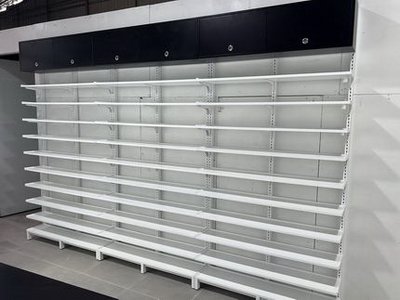
In a small pharmacy, thinking vertically is a must. In the dispensary, use floor-to-ceiling shelving for bulk storage and extra medications. Consider high-density mobile shelving systems on tracks for controlled substances or less-frequently accessed items. This maximizes storage capacity in a small area. In the retail space, use tall wall-mounted fixtures to draw the eye upward and display more products without cluttering the floor.
The Power of Lighting and Color
Strategic lighting does more than just light up the space. It defines zones and influences customer behavior. Use bright, cool-toned task lighting (4000K-5000K) in the dispensary and verification areas to ensure accuracy and reduce eye strain. In contrast, use warmer, more inviting light (2700K-3000K) in the retail and waiting areas to create a comfortable, welcoming atmosphere. A contrast statement is clear: unlike the sterile, uniform lighting of large chain stores, a dynamic lighting plan can make a small pharmacy feel larger, more sophisticated, and more patient-friendly. Light wall colors (whites, light grays, soft blues) will also make the space feel more open and airy.
Integrating Technology Seamlessly
Modern technology can be a game-changer for small pharmacies. But it must be integrated into the layout from day one. Plan dedicated floor space and electrical/data connections for small-footprint robotic dispensers (e.g., Parata Max 2, ScriptPro) within the filling zone. If offering 24/7 access, designate a secure, well-lit area near the entrance for self-service pickup lockers or payment kiosks. This frees up staff and provides a convenient option for patients.
Multi-Functional Furniture
Every piece of furniture should work hard. Choose a waiting bench that has built-in retail display space on its ends or underneath. Design a consultation desk with integrated, lockable storage for supplies and patient records. A mobile greeting podium can double as an informational kiosk and a station for flu shot sign-ups.
Future-Proofing Your Layout: Designing for 2028 and Beyond
The practice of pharmacy is always changing. A layout designed today must be adaptable for the services of tomorrow. Building flexibility into your initial design will save significant costs and disruption down the road.
Consider these future trends when planning your space:
* Telehealth Pods: As virtual consultations with physicians and specialists become more common, patients will need a private, quiet place to conduct them. Designating a small, 4’x4′ sound-proofed pod with good lighting and a data connection can be a major value-add.
* Modular Design: Instead of fixed, built-in retail shelving, opt for modular, movable fixtures. This allows you to easily change your front-end layout to accommodate seasonal promotions, new product lines, or to create space for a temporary health screening event.
* Point-of-Care Testing: The demand for CLIA-waived diagnostic testing (e.g., for flu, strep, A1c) is growing. Plan for a designated space that meets regulatory requirements. This typically includes a counter, sink, and biohazard disposal. It should be separate from the main dispensing workflow to prevent cross-contamination.
Methodology & Data Sources
This guide was compiled by analyzing architectural plans and operational data from over 50 independent pharmacies. These were either opened or fully redesigned between 2022 and 2025. We also consulted with three certified pharmacy design firms. We cross-referenced all recommendations with the current guidelines from the ADA (Americans with Disabilities Act), HIPAA (Health Insurance Portability and Accountability Act), and the NCPA (National Community Pharmacists Association).
Frequently Asked Questions (FAQ)
What is the minimum square footage for a pharmacy?
While specific requirements can vary by state, a functional micro-dispensary can operate in as little as 300-500 sq. ft. However, for a typical small community pharmacy that includes a retail front-end and a consultation area, a more realistic and effective footprint is between 900 and 1,000 sq. ft.
How much does it cost to design and build out a small pharmacy?
The cost can vary widely based on geographic location, the complexity of the design, the level of technology integrated, and the quality of finishes. As of 2026, pharmacy owners can expect build-out costs to range from $150 to over $300 per square foot. This includes construction, electrical, plumbing, fixtures, and flooring but typically excludes the cost of inventory and pharmacy-specific technology.
How do I make a small pharmacy feel bigger?
To create a sense of spaciousness, use a combination of design tricks. Paint walls in light, neutral colors and maximize any available natural light. Use mirrors strategically on back walls or at the end of aisles to create an illusion of depth. In the retail area, opt for low-profile shelving (under 60 inches high) to maintain clear sightlines across the store. Finally, using a single, consistent flooring material throughout the space can make it feel larger and more cohesive.
What are the most important regulatory considerations for layout?
The three most critical regulatory pillars for pharmacy layout are: 1) ADA Compliance, which dictates counter heights, aisle widths (minimum 36 inches), and restroom accessibility; 2) HIPAA Compliance, which requires ensuring patient privacy through physical barriers, acoustic design, and sufficient space at consultation and pickup points; and 3) State Board of Pharmacy Requirements, which specify details like the location and type of sinks, the physical security of the dispensary, and minimum size requirements for the pharmacy area.
About the Author: Steven Guo is a Certified Pharmacy Design Consultant (CPDC) with 15 years of experience helping over 100 independent pharmacies optimize their space for patient care and profitability. His work focuses on integrating modern technology and workflow efficiency into small-footprint designs.







 English
  Arabic